

Here are three things abandoned and derelict vessels dubbed ADVs from powerboats to sailboats—a sad fact of life on waterways around the country—are not:
1. Charming.
2. Quaint.
3. Valuable.
Here’s three things they are:
1. Environmental problems.
2. Hazards to navigation.
3. Flat-out ugly.
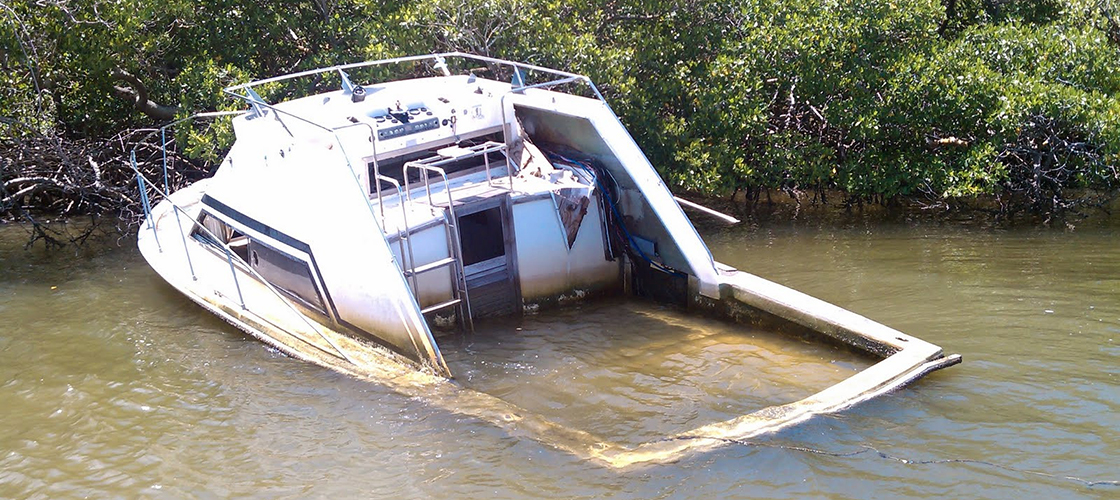
More than unsightly, ADVs are environmental and navigation hazards. Photo courtesy/copyright BoatUS magazine.
But what to do about them? The folks behind the BoatUS Foundation’s “Turning The Tide Summit” have a few ideas and plan sharing them with the general public, boating fans, policy-makers and marine industry leaders during a presentation set for December 6-9, 2026 in New Orleans.
According to a press release from the organization, the in-person event will focus on exploring existing and emerging technologies and best practices for responsible and sustainable disposal of abandoned and derelict vessels The event will focus on fiberglass and composite recycling, as well as subjects related to shrink-wrap and other boating-related waste.
“No waterway community is exempt or safe from ADVs and boating-related waste,” said Alanna Keating, BoatUS Foundation’s Director of Outreach, in the release. “We all have the power to protect our waterways and this summit is one significant way people can learn from each other, network and share solutions for taking real action that can benefit their communities for years to come.”
General admission for the four-day educational/operational affair is $400. The cost for nonprofit association staffers is $200. Student admission is $100. Registration is open.
According to the release, the summit is part of the BoatUS Foundation ADV Program. The goal of the program is “removing and preventing ADVs from the nation’s coastal waters and the Great Lakes to aid in navigational safety and maintain healthy marine ecosystems.”
The program also includes the creation of a national database to pinpoint locations of ADVs and track their removal. The efforts are supported by the National Oceanic and Atmospheric Administration Marine Debris Program.